The world today is not the same as before. We’ve seen massive advancements in technology, remarkable progress in science, and countless changes in human lifestyles. But here’s the irony: the very companies that carry and deliver this groundbreaking techno-scientific progress are deceiving us on a whole new level.
Let’s walk through a simple example. Imagine it’s 11:30 PM, and you’re outside trying to get home. There’s no public transport, no bus, no metro, and your smartphone battery is down to 5%. In urgency, you open a cab booking app, hoping to book a ride before your phone dies. To your shock, the prices have doubled. You may assume this is surge pricing—high demand and fewer drivers. But that’s not the whole story. The real twist? The app knows your battery is low and intentionally hikes the price, knowing you’re desperate.
Sounds unbelievable? Yet, back in 2013, a group of newspapers conducted a study on this. They used two phones: one at 12% battery, and another at 24%, and placed an Uber booking from the same location. The result? The phone with lower battery showed higher fares. That’s not surge pricing—that’s smart manipulation.
Smartphones today are built with batteries that barely last 3–4 years. As the battery degrades, the device’s performance drops. Eventually, you’re forced to buy a new phone. Now pause and imagine: what if smartphones had easily replaceable batteries? It’s not a complex innovation; many electronics already offer that. But companies deliberately seal batteries inside to make them non-replaceable.
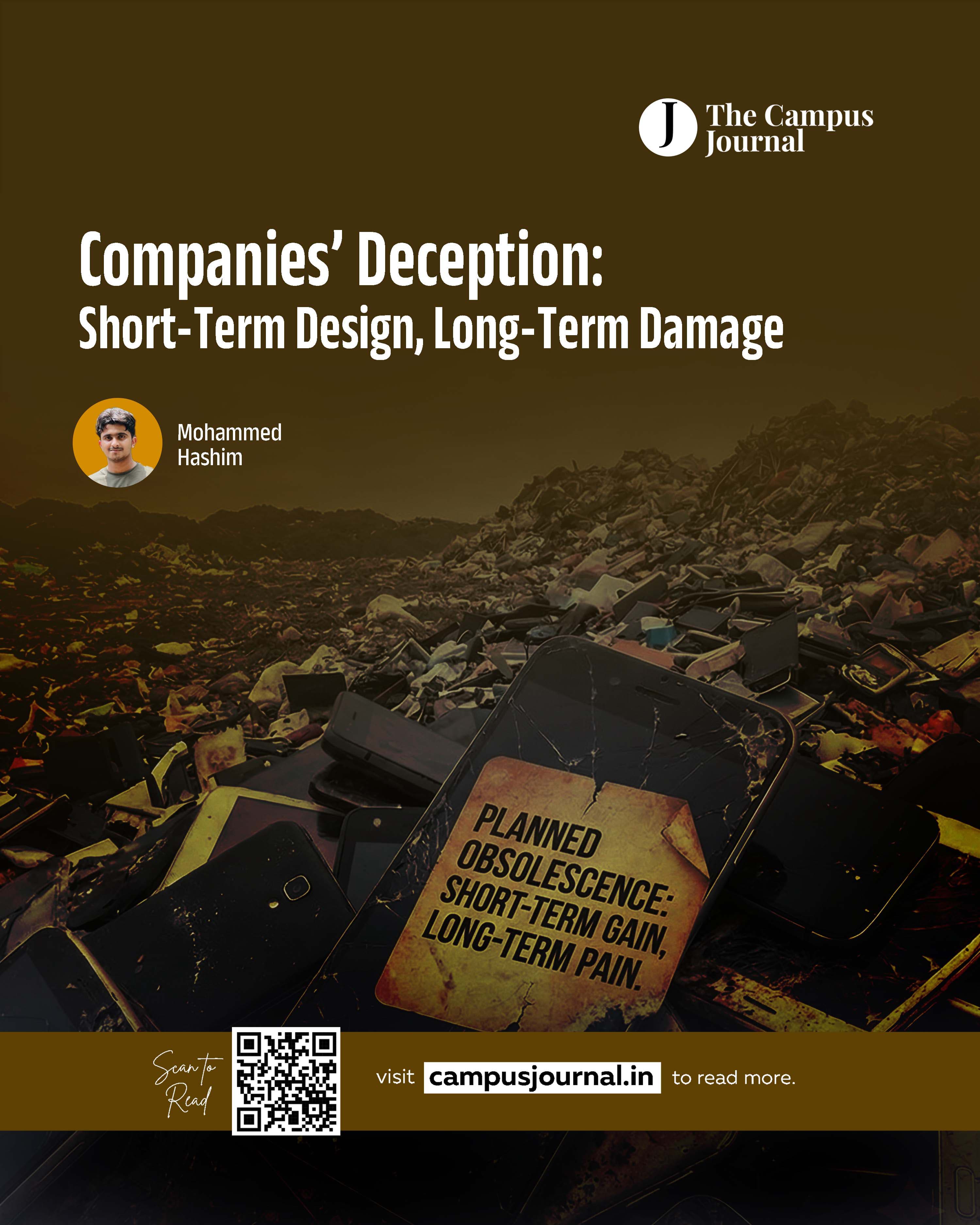
Why? Because of something called Planned Obsolescence. What is Planned Obsolescence? It’s a business strategy where a product is intentionally designed to have a limited lifespan. After a certain period, it becomes slow, outdated, or non-functional, making consumers feel the need to upgrade—even when it’s unnecessary.
Take brands like Vivo, Redmi, Oppo, and Realme. All of them operate under BBK (Bu Bu Gao) Electronics a single parent company. They have access to top-tier technology, yet what do they do? After certain software updates, your phone’s camera quality drops, performance slows, and the overall experience deteriorates. It’s not a coincidence it’s by design.
So, is this an economic strategy or consumer exploitation? Planned obsolescence raises serious ethical questions about the responsibilities of corporations toward consumers. By deliberately designing products with a limited lifespan whether through hardware deterioration, software slowdowns, or unavailability of spare parts companies manipulate consumer behavior for repeat purchases. This approach not only exploits the customer’s trust but also creates a culture of disposability, where durability and craftsmanship are sacrificed for profit. Consumers are often left with little choice but to replace rather than repair, making them unwitting participants in a cycle of waste and spending.
We are plugged into a deceptive matrix, where every upgrade, every suggestion, and every feature may be another level of manipulation. So, the next time you’re buying a product, be meticulous. Conduct thorough research. Choose what is long-lasting, reliable, and genuinely beneficial—not just what’s being marketed to you.