Artistic resistance is a powerful form of expression that channels the emotions and experiences of individuals living in oppression, serving not only as a means of protest but also as a celebration of cultural identity and resilience. In the context of Palestine, this form of resistance art has deep roots, emerging from the historical struggles of the Palestinian people against occupation and displacement, particularly following the establishment of the state of Israel in 1948. From the haunting verses of poetry by luminaries like Mahmoud Darwish to the evocative imagery captured in photography that chronicles everyday life under siege, Palestinian artistic resistance encompasses a diverse array of mediums.
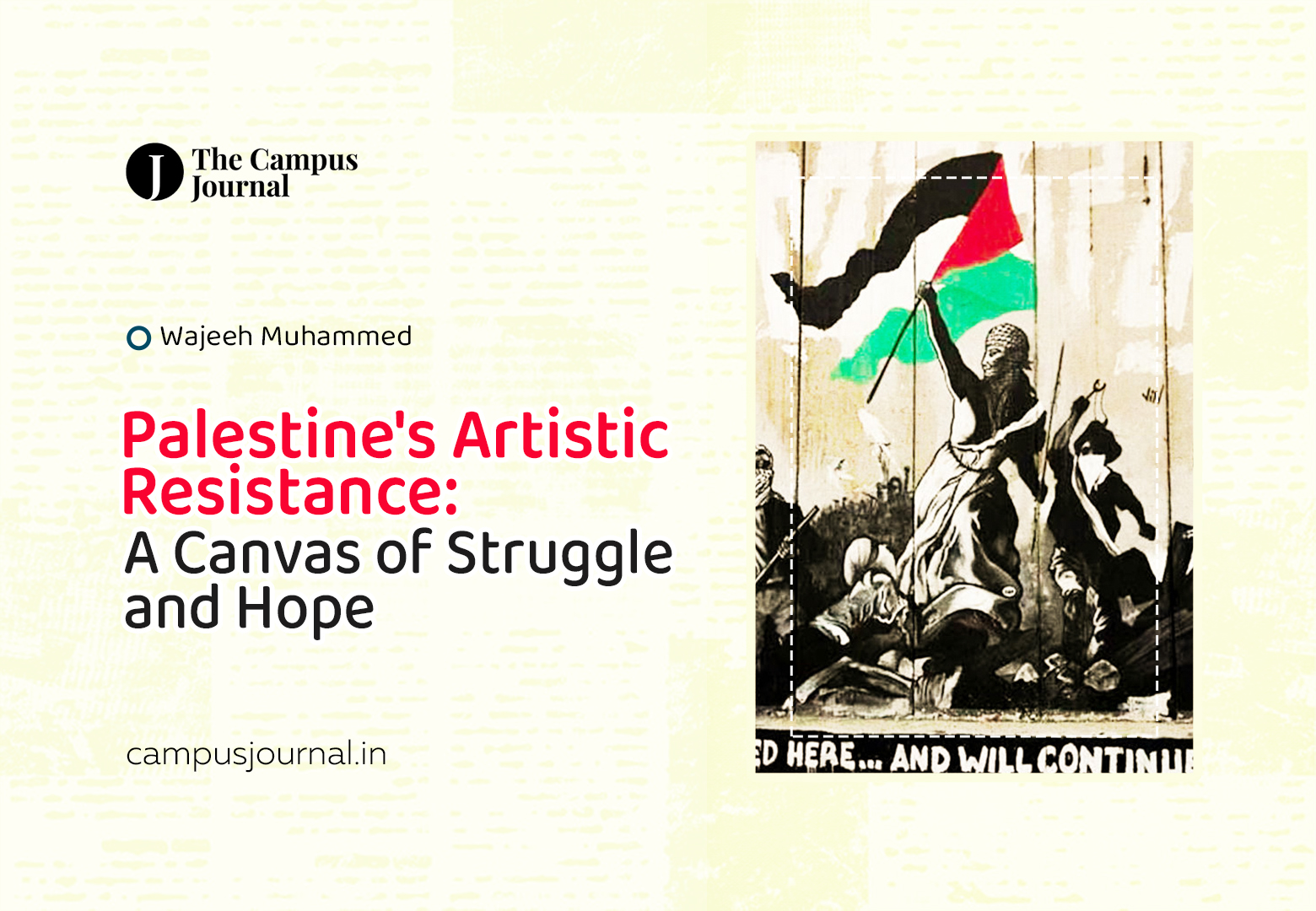
This creative movement also thrives in the vibrant expressions of graffiti that decorate the walls of urban centers, delivering potent political messages while reclaiming public spaces. Films illuminate the Palestinian narrative on screen, allowing filmmakers to depict the complexities of identity and resistance. Meanwhile, hip-hop artists emerge as vocal chroniclers of contemporary struggles, merging beats and lyrics to communicate the unyielding spirit of their community. Through these varied forms—novels, movies, poetry, hip-hop, graffiti, and photography—Palestinian artists continue to create a canvas of struggle and hope, transforming their pain into powerful narratives that resonate not only within their own borders but also across the world. In an ongoing quest for justice and dignity, artistic resistance remains a testament to the unwavering resilience and creativity of the Palestinian people, who refuse to be silenced in the face of adversity.
Novels in Palestinian Artistic Resistance
Palestinian novels offer profound insights into the struggles and hopes of the Palestinian people, using storytelling to resist and reflect on their experiences. In Susan Abulhawa’s Mornings in Jenin, readers follow the Abu Rayya family’s journey from their tranquil village to the harsh reality of refugee camps after being displaced during the Nakba of 1948. The novel powerfully portrays the destruction of their homes and the enduring impact of displacement on successive generations.
Sahar Khalifeh’s Wild Thorns immerses us in the life of Khaled, a young resistance fighter navigating the oppressive environment of Israeli occupation. Through detailed scenes of violent raids and checkpoints, Khalifeh vividly depicts the everyday realities of resistance and the constant threats faced by Palestinians.
Mahmoud Darwish’s The Almond Tree tells the story of a young Palestinian grappling with the violence of occupation while yearning for freedom. The protagonist’s personal and political struggles reflect the broader quest for liberation, capturing the essence of the Palestinian fight for justice.
In’The Inheritance’, Khalifeh shifts focus to a Palestinian woman navigating the complexities of family and political strife. The novel explores the challenges faced by women in a patriarchal society and their critical role in the resistance movement. These novels not only tell compelling stories but also provide a window into the Palestinian experience, challenging prevailing narratives and deepening our understanding of their ongoing struggle.
Poetry in Palestinian Artistic Resistance
Palestinian poetry, profoundly shaped by the works of Mahmoud Darwish, Fadwa Tuqan, Samih al-Qasim, and Ghassan Kanafani, serves as a powerful expression of resistance and identity. Darwish’s lines, like “Write down! I am an Arab,” from Identity Card, assert Palestinian identity with defiance, inspiring unity and a deep sense of nationalism. Tuqan’s The Deluge and the Tree offers hope with, “Undoubtedly, the birds shall return,” symbolizing the resilience and enduring spirit of her people.
Kanafani, though more widely known for his prose, also infused his work with poetic intensity, reflecting the urgency and passion of the Palestinian struggle. Samih al-Qasim’s Raise Your Voice emphasizes the power of vocal resistance with lines like, “My voice is like a flame; it reaches the sky,” urging Palestinians to speak out against oppression. Other poets, such as Rashid Hussein and Tawfiq Zayyad, contributed to this poetic tradition, often writing in response to the suffering and injustices experienced by their people. These works not only captured the emotions of the time but also influenced the broader Palestinian resistance, helping to unite and inspire a collective fight for justice and self-determination.
Movies in Palestinian Artistic Resistance
Palestinian cinema has become a potent tool of resistance, reflecting the struggles and complexities of Palestinian identity. Beginning to take shape in the latter part of the 20th century, especially after the formation of the Palestinian Liberation Organization (PLO) in the 1960s, cinema allowed Palestinians to craft and share their national narratives. Through film, they challenged dominant portrayals of their experience and offered a counter-narrative to mainstream media.
Prominent films like Paradise Now and Omar, directed by Hany Abu-Assad, have gained international recognition for their exploration of the Israeli-Palestinian conflict. Paradise Now humanizes two childhood friends recruited for a suicide bombing mission, delving into their internal struggles and societal pressures. Omar addresses themes of betrayal and loyalty amidst the harsh realities of occupation, providing a nuanced view of the personal and political dilemmas faced by young Palestinians.
The documentary The Wanted 18 adds another dimension by highlighting nonviolent resistance during the First Intifada, focusing on a community in Beit Sahour that establishes a dairy farm as a form of economic self-determination. These films not only serve as a means of cultural expression but also as acts of resistance, promoting national identity and fostering dialogue about the Palestinian experience across global audiences.
Hip-hop in Palestinian Artistic Resistance
Palestinian hip-hop has become a powerful tool for resistance, blending traditional Arabic music with contemporary beats to express the realities of life under occupation. Pioneered by groups like DAM in the late 1990s, this genre tackles social and political issues such as the Israeli-Palestinian conflict, poverty, and discrimination. Their lyrics, such as in the song “Who is the Terrorist?” offer sharp critiques of oppression while also inspiring hope and unity among Palestinians.
Another significant voice in this movement is Shadia Mansour, known as the “First Lady of Arabic Hip-Hop.” Her music confronts colonialism and oppression, and tracks like “El Kofeyye Arabeyye” have become anthems of cultural pride and resistance.
Hip-hop serves as a voice for the younger generation, addressing both the personal and collective struggles faced by Palestinians. It preserves cultural identity and ensures that the stories of displacement and resistance are passed down. By using Arabic lyrics within the global framework of hip-hop, Palestinian artists connect with audiences both at home and in the diaspora, contributing to the broader struggle for justice and self-determination.
Photography in Palestinian Artistic Resistance
Photography has become a crucial medium of resistance in Palestine, capturing both the challenges of life under occupation and the resilience of its people. Artists like Adam Rouhana present authentic images that counteract mainstream media’s often simplistic portrayals, focusing on both hardship and moments of beauty.
Rouhana’s work highlights the contrast between daily life and oppression, as seen in portraits like “Boy Eating the Watermelon,” where the watermelon’s colors reflect the Palestinian flag, affirming identity and humanity amid conflict. Women photographers also play a vital role, documenting gender-specific issues and adding depth to the visual narrative of resistance. Despite historical challenges, their contributions enrich the representation of Palestinian struggles.
Conclusion
The exploration of poetry, cinema, hip-hop, and photography reveals how these artistic mediums have become crucial in articulating and defending Palestinian identity. Each form serves as a unique vehicle for expressing resistance, reflecting personal and collective experiences of struggle, displacement, and resilience.
Poetry captures the essence of longing and cultural pride, while cinema humanizes the conflict and offers a deeper understanding of Palestinian life. Hip-hop blends tradition with contemporary issues, mobilizing both local and global solidarity. Photography provides a nuanced view of everyday life, challenging dominant narratives and celebrating resilience.
Collectively, these artistic expressions form a powerful tapestry of resistance, preserving and amplifying Palestinian voices and experiences. They offer insight into the unyielding spirit of a people committed to their heritage and justice. Mahmoud Darwish poignantly expressed, “We suffer in order to survive, and we live in order to resist.” This sentiment underscores the enduring strength and resilience reflected in Palestinian artistic resistance.
References
-Tuqan, Fadwa. The Deluge and the Tree.* In Fadwa Tuqan: A Life of Art and Resistance, by Amal Ghandour, pp. 112-113. I.B. Tauris, 2009.
-Gertz, Nurith, and George Khleifi. Palestinian Cinema: Landscape, Trauma, and Memory, pp. 45-47. Edinburgh University Press, 2008.
-Darwish, Mahmoud. Unfortunately, it was paradise: selected poems. Translated by Munir Akash and Carolyn Forché, pp. 22–25. University of California Press, 2013.
-Swedenburg, Ted. Resistance and Identity in Palestinian Hip-Hop. Middle East Report*, no. 244, Fall 2007, pp. 26-29.
-Sheehi, Stephen. Palestinian Photography: A Visual Narrative, pp. 55-59. University of California Press, 2016.
-Cinema of Palestine. Wikipedia.
-A Handful of Poems as Doorways into Dialogue About Palestine. *Middle East Institute.
-The Palestine-Israel Conflict. Book by Gregory Harms.
-Palestine +100: Stories from a Century After the Nakba.
-The Deluge and the Tree by Fadwa Tuqan. adarshbadri.me.