A nation’s most valuable asset is its educated populace. To uphold governance, maintain law and order, and sustain the judiciary and security systems, education plays a pivotal role. When examining the historical evolution of India’s education system, from ancient times through the medieval era, even prior to the nation’s formation, it becomes evident that the educational landscape underwent significant transformations at various stages. This thesis primarily delves into the historical development of education within minority communities. In particular, it focuses on the predominant minority group in India, the Muslim community, which historically faced educational disadvantages.
The presentation aims to shed light on a novel approach: how the Islamic Dars system, championed by multifaceted scholars and extending across India, played a crucial role in elevating the Muslim community’s participation in higher education. Additionally, it explores the educational challenges faced by other minority groups and highlights the empowerment of Muslim women in India through integrated education. Notably, the state of Kerala stands out for its achievements in women’s integrated education, propelling them toward world-class educational standards over the past three decades, particularly through the Islamic Dars system, which is considered a successful model in this context.
What is Dars System
Dars system existed in many parts of India. But what is important to discuss here is that the Dars system in Kerala later became a multi-faceted educational center as a source of imparting religious and physical education. As soon as Islam started spreading in Kerala, Islamic education started. The early Muslims settled in the coastal area of Malabar. The first Muslim community was formed by the Arabian merchants. The lessons given by them were the lessons given by the early Islamic primary education. It is considered that for a long time, informally, the primary Islamic lessons were imparted mainly to convince and train the essential elements of Islamic life. It is also assumed that the early religious education providers were not scholars and teachers.
The earliest Islamic schools in Malabar date back to the arrival of Malik bin Dinar and his colleagues. At that time in Kerala, everyone was friendly with each other without caste, religion, caste, or color. Malik Dinar and his colleagues built mosques in many parts of Malaysia with the help of Hindu kings. Mosques were built at places like Quilon, Srikanthpuram, Madai, Kasarkot, Barkur, Mangalore, Kodungallur, and Khadis were appointed there. The early Islamic schools were formed next to the mosques built by them.
All the mosques that were built were led by the imams of these mosques. Imams were the main function of the educational activities of the community. The main goal was to provide all kinds of education to the Muslim community. All the newly emerging port towns had Qazis and imams in mosques. Chaliyam built mosques in coastal towns like Kozhikode, Veliyamkode, Tirurangadi Thanur, Ponnani, and Parappanangadi. There is no doubt that Paravanna and Pantalayani established schools in Kapad and Thikodi mosques, and the centers of education were located in these mosques, mainly for the coastal residents who had converted to Islam. Gradually, a group of students who acquired expertise in various Islamic subjects such as the Qur’an and Hadith started working in the mosques; thus, mosques became prominent centers of religious education at a time when there were no formal educational institutions.
Importantly, the educational activity that took place during this period was for the spiritual and religious education of Muslims. These religious schools tried to form creeds that were united in the science of karma. At that time, Muslim boys went to religious schools to study and were mainly taught about the monotheism of Islam and the Prophet. Meanwhile, the girls were given religious education by their parents at their homes.
Primary education was then imparted to very few men only, and through them the succession of instruction was carried on in Malabar. Since this study was compulsory, the religious schools functioned mainly to fulfill the primary religious needs; secondly, as centers for imparting knowledge on Islamic subjects, special centers for this emerged in some parts of Malabar, and institutes of Islamic higher learning were established; thirdly, these centers were staffed by national and foreign scholars and prophets.
The first organized activity of religious education in Malabar took place through Othupallys. These mosques were mainly established in Muslim-majority residential areas. Initially, boys and later girls were admitted to this Othupally, and when the girls became older, they were removed from the Othupallys and continued through home studies. It is at this stage that some women are appointed for religious teaching. Arabic letters were not translated into Malayalam or taught in Malayalam due to its religious purity. Even if the tutors of Othupally were taught in Othupally, the Qur’an in the Othu (learnful) mosques in the Quran to be distributed in Othupally had taught to write and read in religious riots in The Mappila Muslims adopted the model of the religious schools of the Namboothiri community in Malabar through Othupallys. Little did they try to model it. The Mappila Muslims of Malabar have integrated specific aspects of local culture into their social life. These mosques are one of the signs that gradually the mosques became institutionalized centers of religious learning for Mappila Muslims.
Likewise, it is a fact that the preaching platforms of Malabar have had a great influence in assimilating the knowledge of the Muslims of Malabar culturally, morally, materially, and spiritually. This series of sermons is held in bazaars or open spaces to sensitize people spiritually and thereby materially, culturally, and morally. These preaching platforms are witness to the fact that the scholars who preach like this speak in a very pure language of Malayalam and convey the unique form of the mother tongue to the people beyond the local language. This kind of lecture presentation is still used in many places as a unique method of communication in the field of Mappila teaching. Poonthavanam N Abdullah Musliar, Kootanadu KV Muhammad Musliar, Wailathara Musliar, etc. were eminent speakers in this field.
As in the social arena, preaching was very important in economic terms as well. In addition to forming Islamic personalities by providing public religious education in Muslim society, fundraising for the construction of mosques and madrasas was also done through preaching series. These series of sermons helped a lot in the early days for the spread of the Muslims in Malabar and their sense of unity. Syed Bafaqi’s role in the formation of the AllKerala Islamic Education Board is memorable. The series of lectures led to the origin of regional institutions and the formation of centralized institutions.
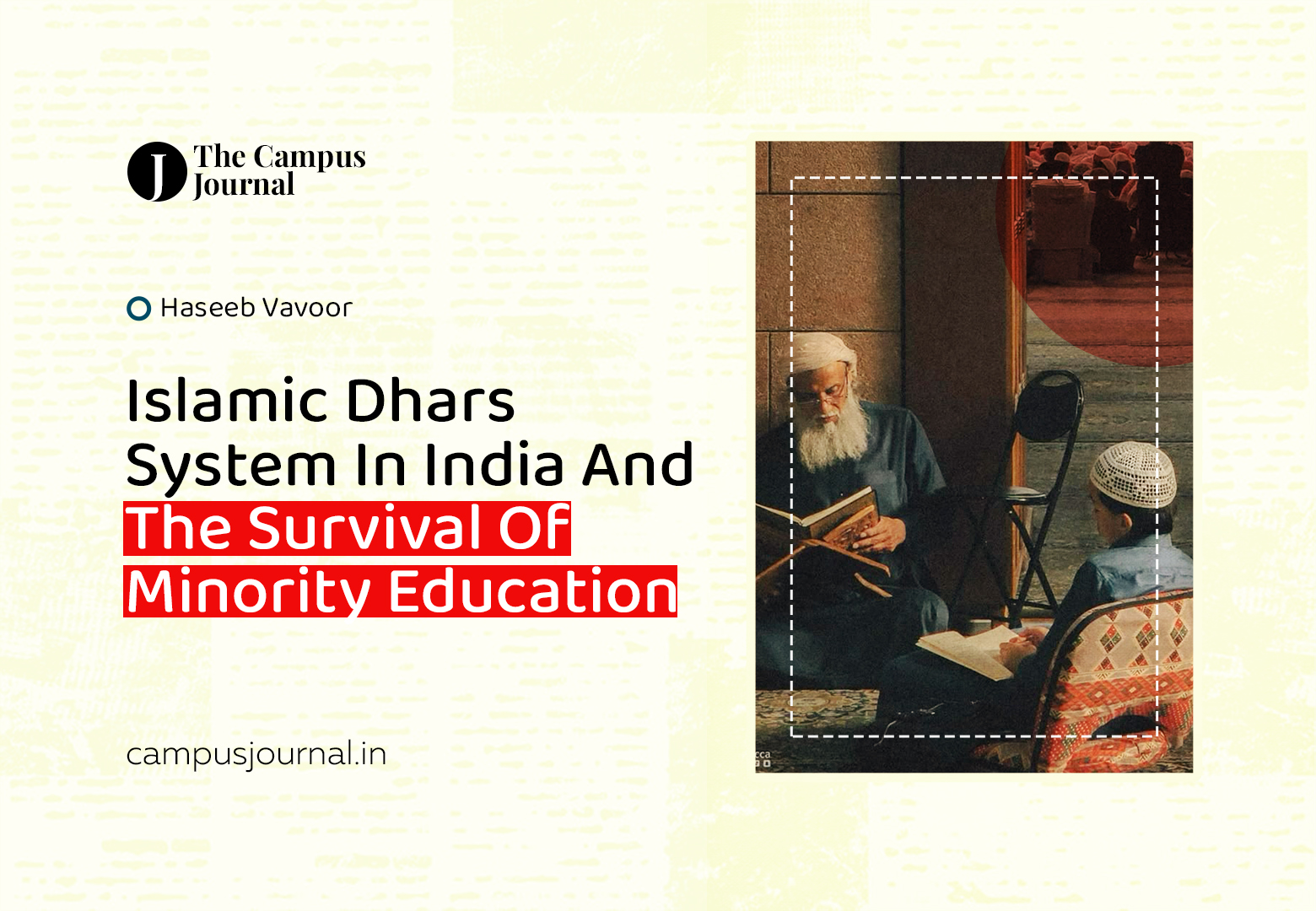
For religious education, the Mappila Muslims have created a curriculum that is different from other Muslim communities over the course of four or five centuries. The Dars system was a unique institution among the Mappila Muslims as centers of religious learning. The word Dars means school. The Darsas were usually placed near the church and the
Darsas in the churches like Ponnani, Mampuram, Nadapuram, and Thalassery were famous. 1498: The Juma Masjid at Ponnani established the famous Dars, introducing a system of higher learning. Ponnani respectfully addressed the person who assumed the administrative authority and Muslim spiritual leadership of the large mosque as Makhdoom Thangal. Students came from places like Madrasi, Bombay, Gujarat, Indonesia, Ceylon, the Maldives, Java, Sumatra, Lakshadweep, etc. Audiences of Islamic scholars were a distinctive feature of such lectures. By the 18th century, these Darsas became centers of higher learning for Islamic studies.
One of the most important methods of those days was the practice of “lighting” in Ponnani, which was the antithesis of the higher education it provided. The word and practice derive from sitting around the lamp in the church of Ponnani. The Dars education here led to Ponnani being named the Mecca of Malabar at that time.
It is a historical fact that the most important education given in the Dars system was some scientific studies, which contributed a lot to the world. The subjects like medicine and astronomy that were taught in Dars were in line with the curriculum of universities in the world at that time. The curriculum of Ponnani in theology, law, and medicine has earned it the status of an international university; later, the curriculum was reduced to ten books only. Faith, religion, Islamic mysticism, and only the subjects became part of the ten books.
The most important strength possessed by the Muslims of Malabar was the emphasis on religious education among them. Therefore, the approach of the British government towards the Othupally was very negative, with the aim of ending a centralized power of the Muslims. The British rulers judged that the unscientific religious teachings and Othupally system were the driving factors behind the Mappila riots of the 1880s in parts of Malabar. The British felt that this religious education was the main obstacle among the Mappila Muslims to attain modern education. She emphasized the necessity of secular education among the Mappilas. As part of that, in 1871, Mappila started a special government education scheme for Muslims. Students completing their studies under the training Mullahs were given gifts and benefits as incentives.
For that, they implemented many planned projects. A plan to provide primary education in Malayalam and religious instruction in Arabic was planned and implemented. In 1894, the attempt to reorganize the Othupallis and the declaration of the Mappila Muslims in Valluvanad and many other places as a backward class were further activities in this regard. After the Mappila Rebellion of 1921, the British government issued an order to provide secular education along with religious education to Muslims. It also led to the establishment of Mappila-aided schools. It evolved from church education to secular education in the middle of the 20th century.
Religious Education Movements in Kerala Today
Today in Kerala, there are two important educational systems to educate the Muslim community religiously, materially, and for their personal development.
1.All Kerala Jam-iyyathul Ulema Board of Religious Education
On May 16, 1945, in a meeting of scholars held at Kariyavatta, it was suggested that a curriculum should be prepared for religious studies for school students from 1st to 10th. The All-Kerala Islamic Religious Education Board was formed out of the conferences held in
Valanchery in 1950 and Vadakara in 1951. The All-Kerala Islamic Religious Education Board was formed to convert the primary religious education that was held in the Othupally into an organized religious education program, and nine thousand madrasas were functioning under this board. Scholars also tried to establish madrasahs in the corners and corners of Malabar through religious sermons. It was formed by the Kerala Islamic Religious Education
Board. The Samastha Kerala Jam-iyathul Muallimeen, formed to provide special training to Muslim scholars, and the Sunni Yuvajana Sangam under the Samasta are working to support the religious studies of the Sunni sect, such as publishing houses.
Likewise, the Sunni Board of Education under the Sunni sect headed by Kanthapuram AP Abubakar Musliar is running about 3000 madrasas in various parts of Malabar.
The Board of Education under the Kerala Mujahideen prepared the curriculum and spread madrasa studies in many parts of Malabar.
Dars System Evolved Into Integrated Education
Today in Kerala, integrated education is the field that has created a revolution in education in a short period of time. That is the educational system in which religious education and material education are taught in the same way. Through it, boys and girls get both education and, through it, reach many higher jobs. The fact that many people who are working abroad as well as working in government posts in Kerala and India as a whole are from the Muslim community is considered to be the greatest achievement of education. NET, JRF considers it an important feature to achieve such important achievements and that these achievements are increasing every year. Chemmad Darul Huda Islamic University, Wafy, Wafiyya, Rahmani, Falila, Zaharawiyya, and other educational institutions are creating a huge educational revolution in Kerala today.
Women Empowerment Through Islamic Education
Empowerment is a comprehensive concept, often described as an overarching term. In its broadest context, empowerment encapsulates the freedom to make choices and take actions. Additionally, it can be characterized as a process that enables individuals to engage in distinctive thinking, take purposeful actions, and exercise control over their lives in a distinct manner. UNESCO defines empowerment as “the expansion of assets and capabilities of poor people to participate in, negotiate with, influence, control, and hold accountable institutions that affect their lives.” An empowered person can have the necessary control over his or her destiny and life. And this includes control over physical, intellectual, and financial resources as well as ideologies.
Education is the milestone of empowerment. And it empowers women by boosting confidence and enabling their active participation in society, politics, and the economy. It also enhances their employment opportunities, fostering financial independence and equal rights. According to Napoleon, “Nation’s progress is impossible without trained and uneducated mothers. If the women of my country are not educated, about half of the people will be ignorant. So, educating women is an essential prerequisite for the construction of an improved society and prosperous nation.
Women were commonly seen as a disadvantaged group in India and around the world, with their mental abilities often underestimated. They were predominantly viewed as caregivers and pillars of support for their families, husbands, and children, and their roles were often confined to domestic responsibilities, with little recognition or value attributed to roles beyond these boundaries. This resulted in a historical imbalance in literacy rates and educational achievements for women in India, where, despite constituting half of the population, they encountered substantial disparities in these vital areas.
According to Census 2011, 17.22 crore Muslims constitute 14.23% of the total population in India. Earlier, the Sachar committee reported that around 31% of Muslims live below the poverty line. Poverty, unemployment, and illiteracy—these are the curses on the Muslim community in this country. Among the Muslim population, approximately . 48% of them are women. These Muslim women are one of the endangered sections regarding the issue of empowerment in India. The 2011 Census has shown that 42.7% of Muslims are illiterate in India. More than 50% of Muslim women are illiterate in India.
Societal attitudes toward women have played a significant role in contributing to their historical disadvantages. There has been a prevalent belief that women do not need education, as their primary role was seen as confined to their homes with limited engagement in public life. This view was exacerbated by the scarcity of educational resources. In the era when knowledge was primarily acquired through the Gurukula system, substantial limitations existed. Gurukula were few in number, and their facilities were basic. This made it challenging to provide women with educational opportunities. Students typically attended Gurukula or lived with their teachers to gain knowledge, but this practice posed substantial challenges for girls. Additionally, there were hurdles such as limited educational institutions, long distances to access them, early marriages for girls, a shortage of female teachers, and Muslim women’s involvement in wage-earning activities to support their families. Moreover, many Muslim parents lacked literacy and awareness about the importance of educating their daughters, creating an unsupportive environment for women’s education. 2 This, coupled with economic constraints within Muslim families and limited educational opportunities within religious contexts, collectively constituted the major obstacles faced by Muslim women in their quest for education.
Individuals who attained education and empowerment through the Dars system frequently cultivated intentions, concerns, and objectives concerning their households and the future prospects of their daughters. They came to recognize the significance of promoting education universally, regardless of gender. Napoleon once said, “Give me educated mothers, and I will give you educated nations.” 2 This is because educated women are able to play a vital role in developing countries. There is a famous saying that “to educate a girl child means to educate a family.”
According to Islam, “A mother’s lap is the first school for a child.” There is no priority for men over women in relation to the right to education. Both are equally encouraged to acquire education. Indeed, all the Quranic verses that relate to education and which advocate the acquisition of knowledge were directed to both men and women alike.
During the early 20th century, a noteworthy development transpired in the state of Kerala with the emergence of multiple Islamic organizations, predominantly guided by Islamic clerics. Prominent among these organizations were entities like the Samastha Kerala.
Jamiyyathul Ulama (SKJU), the Muslim Educational Society (MES), and the Kerala Nadvathul Mujahideen (KNM), among others. These organizations initiated the establishment of madrasas, which represented a significant educational endeavor by providing free education to Muslim students. They effectively garnered student interest by actively emphasizing the importance of Islamic education within the Muslim community. Notably, these madrasas extended their curriculum to encompass essential non-Islamic subjects, offering a holistic educational experience to their students.
Towards the conclusion of the 20th century, the establishment of women’s colleges marked a significant development in the realm of Islamic education. During this period, Muslim women began to pursue the Aflalul Ulama course, which later evolved into a professional degree program. These changes ushered in a transformative phase in the Islamic education sector. An integrated education system was introduced, integrating Islamic and other subjects within a single syllabus—a pivotal milestone in Islamic education. Various specialized courses, such as Wafiyya, Falila-Faleela, Hadiya, and Zaharaviyya, were established, proving highly relevant and popular among Muslim girls in the modern era. Through these courses and the establishment of women’s colleges, Islamic organizations were able to ensure the high-quality education of Muslim girls. This transformative initiative marked a significant revolution in the realm of women’s education.
According to the All India Survey on Higher Education (2019-20), enrollment of Muslim students increased compared to other minority communities. According to the response received during the survey, 5.5% of students belong to the Muslim minority, and 2.3% are from other minority communities. Muslim minority and other minority communities have more female students than male students.
Conclusion
The 21st century saw the rise of educational institutions in all parts of India and the implementation of compulsory primary education for all citizens in the country, which led to the emergence of a number of highly educated people in India. The Muslims, who are the dominant minority in India and discussed here, were illiterate and had no access to modern education. From there, how Muslims have acquired primary and modern education today has been discussed at length through this paper. The education of the Muslim community needs to rise to many heights, and we hope that it will be possible.
References
-Iftekhar Unais, “A Case Study of Empowerment of Muslim Women Through Education in India,” vol. 3, issue 2, April 2018.
-Nures Salam. “Education of Muslim Women in India: A Brief Discussion from Past to Present.” vol. 6, issue 1, March 2018.
-Dr. Manzoor Hussain, Manzoor Ahmed Khan, Ahmad Khan. “Educational Status of Muslim Women in India: Issue and Challenges.” (SAS publication).
-Firdous Bano. “Educational Status of Muslim Women in India: An Overview.” (IOSR, JHSS) vol-22, issue-6, June 2017.
-All India Survey on Higher Education 2019-20. Government of India, Ministry of Education, Department of Higher Education, New Delhi 2020.
-Satheesh Chandra. “Medieval of India,” DC Books, 2022, January 1.
-P.A. Varyar, “India Before British Dominant,” DC Books, 2017, June 30.
-KKN Kurupp, “Sheiq Zaindheen Maqdhoom and Thuhfathul Mujahedeen,” Malabar Institute for Research and Development, 2020.
-Saleem IAS, N.E. Hafis Muhammad, MC Vasisht, “Heritage of Malabar and Glory,” Mathrubhumi Books, 2011.